ChatGPT Image Aug 22, 2026, 01_58_04 AM

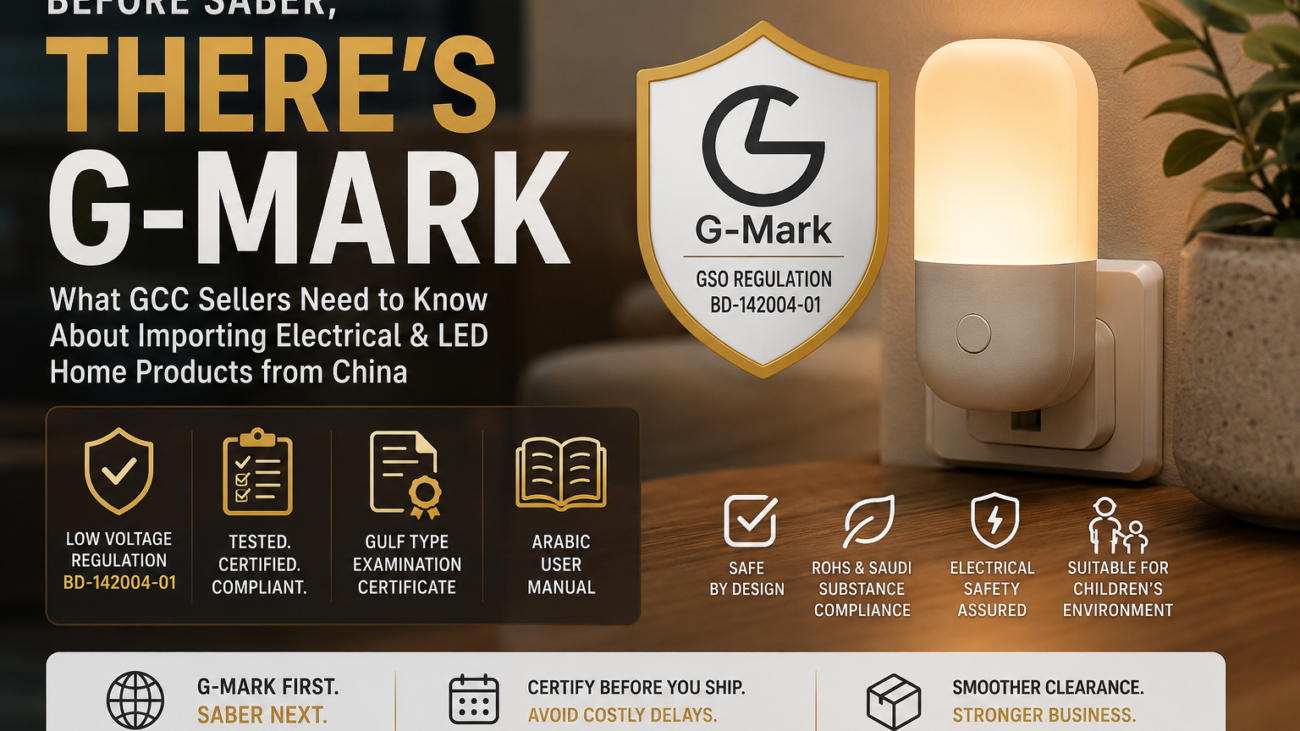
Before SABER, There’s G-Mark: What GCC Sellers Need to Know About Importing Electrical & LED Home Products from China

Night lights, LED decor, small electrical fittings — for a seller already sourcing toys or kitchenware, adding electrical home products to the catalog looks like an easy win. No food-contact testing, no small-parts panic, just a plug, a chip, and a light. Demand for this kind of decor is strong on Amazon.sa and Noon, and the margins are usually better than on plastic housewares.

It’s also the category where “we already have SABER sorted” causes the most expensive surprises. Electrical products carry a certificate requirement that has nothing to do with the general SABER process most sellers already know — and until that certificate exists, SABER won’t process the product at all.

That certificate is G-Mark, issued under the Gulf Technical Regulation for Low Voltage Electrical Equipment and Appliances. It’s a separate track from the toy regulation (BD-131704-01) covered in our SABER post, with its own regulation number, its own testing, and its own timeline — and it has to happen first. Here’s how it actually works, and where sellers building out an electrical or LED decor line get caught out.

1. The Compliance Layer Most Sellers Miss on Electrical & LED Products

Toys clear Saudi customs under Technical Regulation BD-131704-01. Electrical and LED products — night lights, small appliances, lighting fixtures, anything that plugs in or runs on a battery pack — fall under a different one: BD-142004-01, the Gulf Technical Regulation for Low Voltage Electrical Equipment and Appliances. It covers household appliances, lighting and LED products, and electrical components broadly, whether they’re manufactured locally or imported.

Compliance here runs through G-Mark, listed on the GSO Conformity Tracking System (GCTS). Getting it means a Gulf Type Examination Certificate (GTEC), test reports from an ISO 17025 or ILAC-accredited lab, a full Arabic user manual, and a risk assessment document — one that has to address chemical, physical, mechanical, electrical, and radioactive risk factors, not just whether the wiring is safe.

Where assuming “SABER covers it” fails: G-Mark isn’t a parallel option to SABER — it’s a prerequisite. An electrical product has to be certified and listed on the GCTS before SABER registration will accept it at all. A seller who’s only ever registered toys or kitchenware has never had to touch this system, and a supplier’s claim that something is “CE certified” doesn’t substitute for it — CE is a different regulator entirely.

2. The 4 Most Common Technical Barriers for Electrical & LED Importers

  1. Not knowing G-Mark exists as a separate step. The single most common gap. Sellers submit an electrical product to SABER the same way they’d submit a kitchen item, and the registration stalls because there’s no G-Mark on file to reference.
  2. Hazardous substance non-compliance. Saudi Arabia enforces its own restrictions on lead, cadmium, and other substances in electrical and electronic components, similar in spirit to RoHS elsewhere. A factory’s “standard” wiring or solder isn’t automatically compliant with the Saudi list.
  3. Incomplete risk assessment documentation. A basic electrical safety test isn’t the same as the full risk analysis the regulation asks for. Missing the mechanical or chemical-risk sections of that document is a common reason a G-Mark application gets sent back.
  4. Extra scrutiny on children’s electrical products. A nursery night light sits in an odd spot — it’s regulated as an electrical product, not a toy, but reviewers and retailers alike look harder at battery access, heat, and small-parts risk on anything clearly designed for a child’s room.

3. How On-the-Ground Sourcing Prevents G-Mark Delays

An electrical product built for one market doesn’t automatically clear another, and a factory quoting “CE ready” is answering a question nobody in Saudi customs is asking. Working with a sourcing partner based in China closes that gap before production even finishes:

  • G-Mark sequencing built into the timeline. Certification gets scheduled before SABER submission, not discovered as a missing step after a shipment is already built.
  • Component-level substance checks. Wiring, solder, and casing materials get verified against Saudi’s restricted-substance list before a factory locks in its bill of materials.
  • Full risk assessment documentation. The chemical, mechanical, and electrical risk sections get prepared alongside the safety test report, not left for a reviewer to flag as missing.
  • Notified Body coordination for GTEC. Samples go to labs actually authorized to issue a Gulf Type Examination Certificate, so the result is usable for G-Mark rather than needing to be redone.

Build an Electrical & Decor Catalog That Clears Customs the First Time

A night light or an LED decor piece doesn’t carry the reputational weight of a toy recall, but a shipment stuck behind a missing G-Mark is just as costly — it just shows up as a stalled SABER application instead of a customs hold. The sellers who add this category smoothly are the ones who treat G-Mark as step one, not a surprise at step four.

Ready to add compliant electrical & LED products to your GCC catalog?

Contact Bait Farasha to audit your supplier’s G-Mark documentation or explore our pre-vetted catalog of home decor and electrical products.
ChatGPT Image Aug 21, 2026, 02_58_10 AM

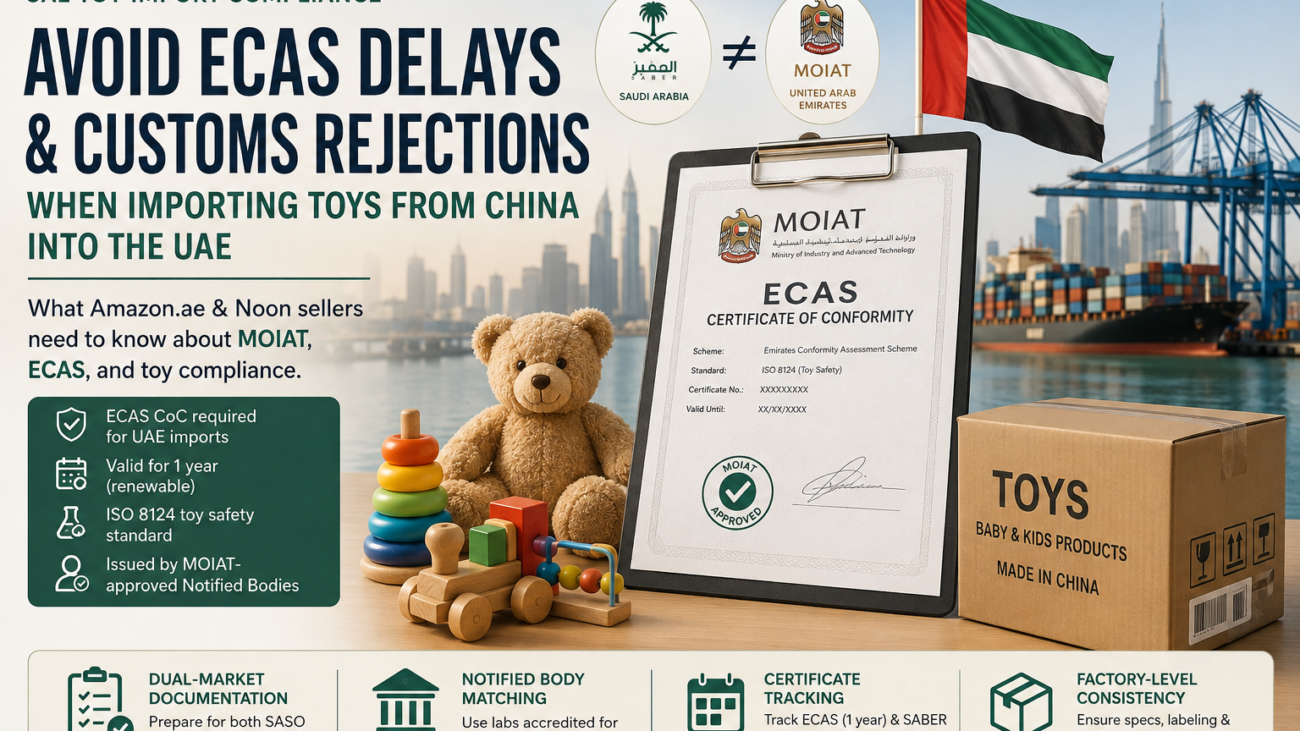
How GCC E-Commerce Sellers Can Avoid ECAS Delays and Customs Rejections When Importing Toys from China into the UAE

Sellers who’ve already sorted out Saudi SABER compliance often treat the UAE as the easy next step — same region, same product, same paperwork, right? For Amazon.ae and Noon sellers moving baby and kids’ products, the UAE market is large, fast-growing, and sits right alongside Saudi Arabia in most GCC expansion plans.

Except shipments built on that assumption get held at Jebel Ali or Dubai customs anyway — not because the product is unsafe, but because Saudi compliance and UAE compliance run on two entirely separate systems, and a certificate that clears SABER means nothing to UAE customs.

The UAE runs its own certification regime through MOIAT, and it works differently enough from SASO/SABER that treating them as interchangeable is one of the most common — and most expensive — mistakes GCC-focused sellers make. Here’s what actually governs toy and baby product imports into the UAE, and how the right sourcing process handles both markets without duplicating the work twice.

1. The Reality of UAE Compliance for Baby & Kids Products

Where Saudi Arabia runs compliance through SASO and the SABER platform, the UAE runs it through the Ministry of Industry and Advanced Technology (MOIAT) — the body that absorbed the former ESMA (Emirates Authority for Standardization and Metrology) in 2020. If a supplier or freight forwarder mentions “ESMA certification,” they mean the same system; the name changed, the requirement didn’t.

Toys and baby products fall under MOIAT’s Emirates Conformity Assessment Scheme (ECAS), which requires a Certificate of Conformity (CoC) issued by a MOIAT-approved Notified Body — SGS, TÜV Rheinland, and Intertek are the names sellers will see most often. For toy safety specifically, the technical basis is ISO 8124, the international standard covering mechanical and physical safety, flammability, and the migration of certain elements from toy materials.

The structural difference that catches most sellers off guard: Saudi Arabia’s system pairs a product-level PCoC with a per-shipment SCoC, so every shipment needs its own certificate. The UAE’s ECAS CoC is issued at the product level and stays valid for one year, renewable about a month before expiry. That’s a different certificate, on a different renewal calendar, issued by a different set of bodies — not an upgrade of the Saudi paperwork, a parallel one.

Where assuming “GCC compliance” covers both markets fails: A supplier who says a toy is “SABER approved” hasn’t said anything about the UAE. The two systems don’t recognize each other’s certificates, use different Notified Bodies, and in some cases test against different clauses of otherwise-similar standards. Each market needs its own technical file, built from its own test reports.

2. The 4 Most Common Technical Barriers for UAE Toy & Baby Product Importers

  1. Treating ECAS as a formality once SABER is done. The most expensive assumption in GCC sourcing. A SABER-approved toy still needs its own ECAS CoC, its own Notified Body review, and its own test reports before it can legally enter the UAE.
  2. Working from outdated ESMA-era guidance. Since the 2020 merger into MOIAT, application portals, document formats, and some technical regulations have been updated. Suppliers and even freight forwarders sometimes still reference the old ESMA process, which can mean submitting the wrong document set.
  3. Using a lab outside the Notified Body’s accredited scope. A lab can hold broad accreditation without being scoped for the specific test a toy actually requires. MOIAT reviewers check this closely, and a scope mismatch here is one of the more common reasons a technical file gets sent back.
  4. Inconsistent product details across the file. HS code, product description, and labeling need to match exactly across the CoC application, the invoice, and the packaging — the same discipline SABER demands, just checked by a different reviewer against a different checklist.

3. How On-the-Ground Sourcing Prevents UAE Compliance Failures

A supplier optimized for the Saudi market isn’t automatically ready for the UAE, and vice versa. Working with a sourcing partner based in China who tracks both systems means the same production run can be documented correctly for whichever market — or both — it’s headed to:

  • Dual-market documentation from the start. Test reports and technical files are prepared against both SASO/GSO and MOIAT requirements up front, instead of scrambling to redo paperwork when a shipment misses a market it wasn’t built for.
  • Notified Body matching. Samples go to labs whose accreditation actually covers ISO 8124 testing for the UAE, not just a general safety accreditation that looks similar on paper.
  • Certificate calendar tracking. ECAS renewals are tracked on their own one-year cycle, separate from SABER’s per-shipment cadence, so a catalog doesn’t quietly go out of compliance between orders.
  • Factory-level consistency checks. The same product specification, labeling, and packaging are verified before production, so nothing drifts between the batch built for Saudi Arabia and the batch built for the UAE.

Build a Supply Chain That Works Across the Whole GCC, Not Just One Market

Saudi Arabia and the UAE are the two biggest e-commerce markets in the Gulf, and sellers scaling across both need a sourcing process that treats them as two separate compliance tracks rather than one shared checklist. The catalogs that expand fastest are the ones where that distinction gets built in from the first production run, not discovered at a UAE port.

Ready to bring compliant baby & kids’ products into the UAE market?

[Contact Bait Farasha] to audit your ECAS documentation or explore our pre-vetted catalog of MOIAT-ready baby and kids’ products.

ChatGPT Image Aug 19, 2026, 04_05_46 PM

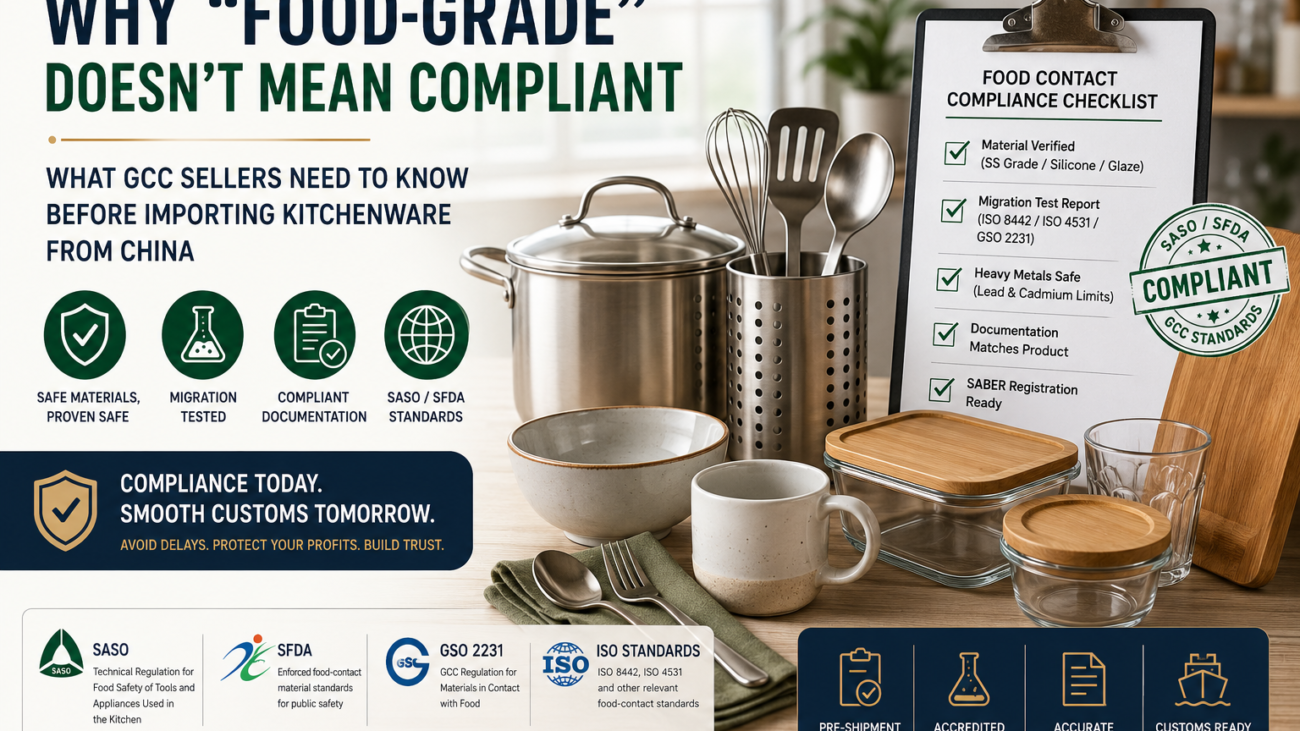
Why “Food-Grade” Doesn’t Mean Compliant: What GCC Sellers Need to Know Before Importing Kitchenware from China

Most SABER-registered importers know the general shape of Saudi product compliance: a Product Certificate of Conformity, a Shipment Certificate of Conformity, and a technical regulation sitting behind both. What’s less well known is that kitchenware carries an additional, more specific layer on top of that.

Saudi Arabia enforces it through the SASO Technical Regulation for Food Safety of Tools and Appliances Used in the Kitchen, which applies to anything that touches food during storage, preparation, or serving — cookware, tableware, storage containers, drinkware, and utensils alike. Article 4 is the operative clause: it sets migration limits so that whatever a product is made of can’t leach into the food it holds.

Running alongside it is GSO 2231/2012, the GCC-wide regulation covering any material intended to come into contact with food, plus GSO 839 and GSO 1863 for food packaging specifically. And where SASO/SABER issues the import certificate itself, it’s the Saudi Food and Drug Authority (SFDA) that owns and enforces the underlying food-contact-material standards — a second regulator most first-time kitchenware importers never think to check.

Where direct factory sourcing fails: Ask a Chinese kitchenware supplier if their product is “food grade,” and almost every one will say yes. Food grade isn’t a certification — it’s a marketing term. What SFDA and customs actually require is a migration test report from an accredited lab, run against the standard that matches the material: ISO 8442 for tableware and cutting tools, ISO 4531 for lead and cadmium emission from glass and porcelain glazes, GSO 2231 for food-contact materials generally. A supplier’s word that something is food grade satisfies none of these.

2. The 4 Most Common Technical Barriers for GCC Kitchenware Importers

  1. Stainless steel grade substitution. 304 and 201 stainless steel look identical, weigh about the same, and cost noticeably different amounts to produce. 201 carries less nickel and chromium, corrodes faster, and isn’t meant for prolonged food contact — but it’s routinely sold as 304 on B2B platforms unless a buyer requests spectrometer (XRF) testing to confirm the actual alloy.
  2. Glaze and paint heavy metals. Ceramic and glass items — herb jars, mugs, decorative tableware — fall under SASO-ISO 4531 for lead and cadmium leaching from painted or glazed surfaces. The most decorative, eye-catching glazes are often exactly the ones most likely to fail this test, and there’s no way to tell by looking.
  3. Silicone filler dilution. Genuine food-grade silicone isn’t cheap. Some manufacturers cut it with fillers or lower-grade compounds to hit a price target — the finished product looks and feels normal, but fails migration and odor testing.
  4. Documentation that doesn’t match the material. As with any SABER-registered product, the HS code, invoice description, and certificate need to align exactly — but for kitchenware, the test report also has to reference the correct standard for the correct material. A stainless-steel bottle and a melamine tableware set are tested under entirely different clauses, and a generic “food safe” report for the wrong material won’t clear customs.

3. How On-the-Ground Sourcing Prevents Kitchenware Compliance Failures

A factory’s incentive is to ship product. A sourcing partner’s job is to make sure that product clears customs and holds up once it’s actually in a customer’s kitchen. Working with a team based in China closes the gap between what a factory claims and what SFDA and SASO actually require:

  • Material verification before deposit. Alloy composition, glaze safety, and silicone grade get checked before payment goes out — not after a shipment is already built.
  • Migration testing against the right standard. Samples go to accredited labs for the specific test that applies — ISO 4531 for a glazed ceramic jar, ISO 8442 for a stainless tableware set, and so on.
  • Documentation matched to the product. Test reports, HS codes, and SABER entries get aligned to the exact material and product type before goods leave the factory, not reconciled after a customs hold.
  • Coordination with accredited labs in China. We work directly with labs recognized for GSO and SFDA-aligned testing, so results hold up for SABER registration instead of needing to be redone once goods reach Saudi Arabia.

Build a Compliant, High-Margin Kitchen Catalog

Kitchenware doesn’t carry the reputational risk of a toy recall, but a customs hold or a failed migration test is just as costly to a growing catalog — in demurrage, in delayed listings, and in account standing on Amazon.sa or Noon. The sellers who scale this category fastest are the ones who treat “food grade” as a claim to verify, not a box that’s already checked.

Need compliant, market-ready kitchenware for your GCC store?

Contact Bait Farasha to audit your supplier’s material documentation or explore our pre-vetted catalog of cooking tools, drinkware, and kitchen storage.

saber

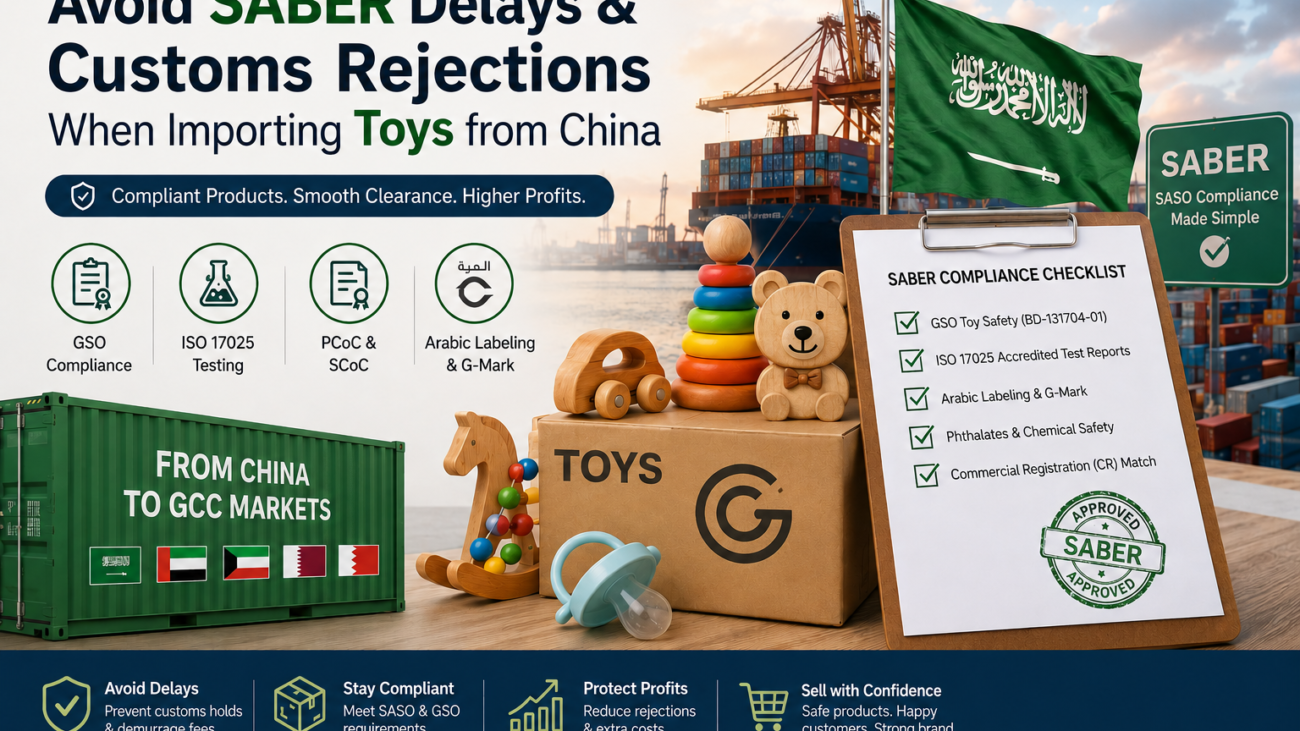
How Saudi & GCC E-Commerce Sellers Can Avoid SABER Delays and Customs Rejections When Importing Toys from China

For e-commerce sellers on Amazon.sa, Noon, and regional GCC marketplaces, scaling a catalog of baby and kids’ products from China should be simple. Demand across Saudi Arabia and the Gulf is high, margins on wooden toys and baby gear are healthy, and Chinese manufacturing infrastructure is unmatched.

Yet, every week, shipments sit impounded at King Abdulaziz Port in Dammam or King Khalid International Airport in Riyadh.

The issue isn’t product quality—it’s compliance mapping. Importing regulated items into Saudi Arabia requires precise adherence to SASO (Saudi Standards, Metrology and Quality Organization) rules and the SABER platform. For importers sourcing directly via online chat folders or unverified suppliers, one missing document can result in hefty demurrage fees, rejected customs entries, or total shipment destruction.

Here is how smart GCC e-commerce sellers navigate SABER compliance when importing toys and baby products from China—and how on-the-ground support eliminates supply chain friction.

1. The Reality of SABER Compliance in Saudi Arabia

SABER is an online portal launched by SASO to register and issue Conformity Certificates for imported goods entering Saudi Arabia. For toys and baby products, compliance is enforced stringently:

  • PCoC (Product Conformity Certificate): Valid for 1 year. This proves your product model complies with relevant GSO (GCC Standardization Organization) technical regulations (such as BD-131704-01 for toy safety).

  • SCoC (Shipment Conformity Certificate): Required for every single commercial container or air freight shipment entering the Kingdom. It cannot be issued without an active PCoC.

Where direct factory sourcing fails: Most factories on Chinese supplier platforms will claim they are “certified for Saudi Arabia.” What they usually mean is they passed a generic European test (like basic CE) years ago. When customs asks for laboratory test reports from an ISO 17025-accredited body explicitly aligned with GSO standards, unvetted suppliers often fail to produce them, leaving the Saudi importer stranded.

2. The 4 Most Common Technical Barriers for GCC Importers

When sourcing Montessori toys, nursery accessories, and feeding gear, four major documentation and physical test gaps lead to customs rejections:

  1. GSO Toy Technical Regulation (BD-131704-01): Requires physical tests for mechanical integrity (sharp edges, small parts choke hazards), flammability, and heavy metals transfer (migration of 19 toxic elements).

  2. Arabic Labeling & GCC Conformity Marking (G-Mark): Physical products and retail packaging must feature the G-Mark logo, safety warnings in clear Arabic, and traceable importer/manufacturer credentials. Sticker overlays applied haphazardly at the port are frequently rejected.

  3. Phthalates & Chemical Safety: Soft plastics, silicone feeding sets, and bath toys must be certified free of restricted plasticizers (DEHP, DBP, BBP, DINP) and BPA.

  4. Commercial Registration (CR) Alignment: The SABER PCoC must be applied for using the Saudi commercial registration holder’s account. Discrepancies between the HS Code, invoice descriptions, and SABER entries immediately trigger customs holds.

3. How On-the-Ground Sourcing Prevents Logistics Failure

A factory’s core objective is to ship units out of their factory gate; a sourcing partner’s job is to ensure those units clear Saudi customs and sell smoothly.

Working with an on-the-ground team in China bridges the gap between Chinese factory floors and GCC regulatory standards:

  • Pre-Production Document Audits: We inspect a factory’s test reports before you pay a deposit. If their EN71 or GSO certificates are outdated, incomplete, or issued by unaccredited labs, we flag it immediately.

  • Factory-Level Sample Physical Testing: Samples are pulled directly from the production line—not hand-picked “golden samples”—to verify build quality, paint non-toxicity, and mechanical durability.

  • Correct Packaging at the Source: We mandate that packaging artwork includes correct Arabic safety warnings, G-Mark placement, and required barcodes during printing in China, eliminating costly re-labeling in Middle Eastern warehouses.

  • Coordination with SASO-Notified Bodies: We work alongside accredited inspection bodies in China to streamline physical container inspections and facilitate smooth SCoC issuance before your freight leaves port.

Build a Compliant, High-Margin Supply Chain

Navigating Saudi customs regulations shouldn’t prevent you from growing your e-commerce brand. By establishing clear compliance controls in China before goods are manufactured, GCC sellers protect their margins, maintain account health on platforms like Amazon.sa and Noon, and build long-term customer trust.

Need compliant, market-ready baby & kids’ products for your GCC store?

[Contact Bait Farasha] to audit your supplier documentation or explore our pre-vetted catalog of Montessori, feeding, and nursery products.

ChatGPT Image Aug 9, 2026, 02_49_21 AM

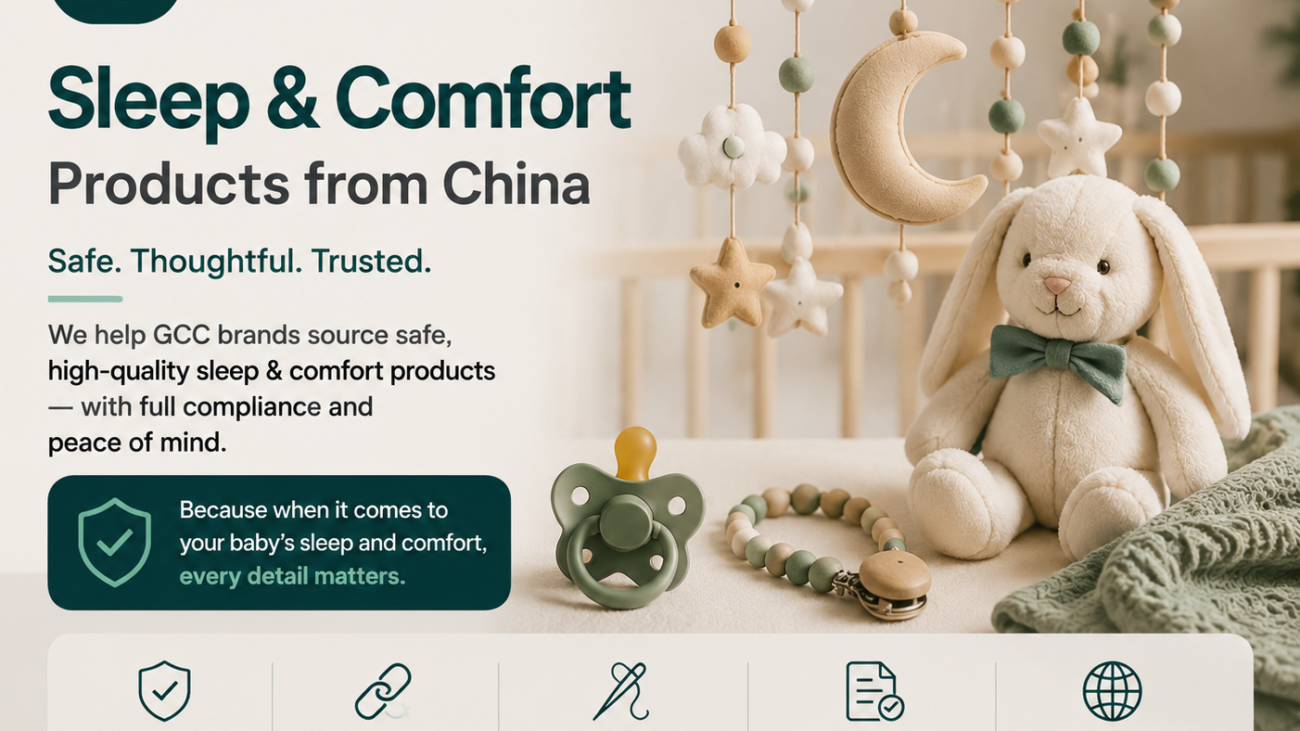
Sourcing Sleep & Comfort Products from China: Why This Category Punishes Shortcuts Fastest

Cot mobiles, soothers, and comfort items look simple — until a loose bead or a rough seam reaches a parent’s hands.

Sleep and comfort products don’t get talked about as much as Montessori toys or bath sets, but they carry some of the highest trust — and the highest risk — of any category in the baby and kids catalog. A cot mobile hangs above a sleeping infant. A soother goes directly into a baby’s mouth for hours at a stretch. A comfort toy gets gripped, chewed, and washed on repeat. There’s very little room between “good enough” and “not safe,” and almost no room to hide a shortcut.

That’s also why this is the category where poor sourcing shows up fastest and most visibly. A weak finish on a wooden toy might take months of use to become obvious. A loose bead on a cot mobile or a rough seam on a comfort toy is often obvious the first time a parent picks the product up.

Where Sleep & Comfort Products Actually Fail

The failure points in this category aren’t exotic — they’re the basics, executed inconsistently:

  • Bead and small-component security. Cot mobiles and soothers often use small decorative components — beads, rings, clips — that need to be genuinely fixed in place, not just glued well enough to pass a first inspection. This is a small-parts and choking-hazard risk that a factory under time pressure can quietly under-engineer.
  • Stitching and seam consistency. Comfort toys live through repeated handling and washing. A seam that holds on sample one but not on unit two hundred is a production-consistency failure, not a design failure — and it’s invisible until a buyer is already holding a bulk order.
  • Fastening reliability. Soothers and comfort items typically have straps, clips, or attachment points that need to survive real use, not just a shelf display. A fastening that looks secure in a product photo can still fail under the kind of repeated pulling a baby actually puts it through.
  • Material and dye safety near the mouth and face. Soothers and many comfort items sit close to a baby’s mouth and face for extended periods, which raises the bar on material and dye safety documentation well above what a toy sitting on a shelf would need.

None of these are hard for a well-run factory to get right. They’re just easy for an unverified one to get wrong, and none of them are visible from a listing photo or even a single sample if that sample was hand-finished more carefully than the rest of the run will be.

What We Check Before a Sleep & Comfort Supplier Enters Our Network

  1. Track record over a single sample. Because craftsmanship issues in this category often show up between units rather than within one, we weigh a supplier’s consistency across previous production runs as heavily as we weigh the sample in front of us.
  2. Fastening and small-component stress checks. Beads, clips, and straps are inspected specifically for security under repeated use, not just visual placement — the kind of check that a buyer relying on photos alone has no way to perform.
  3. Material and dye documentation, upfront. Given how much of this category touches a baby’s mouth and skin directly, we require clear material safety documentation before a sample even ships, the same discipline we apply to feeding and weaning products.
  4. Compliance mapping to destination. Sleep and comfort products sold into the GCC still need to clear EN71/CE and SASO/GSO benchmarks, along with SABER conformity on the Saudi side — and since SABER registration is tied to the Saudi CR holder, we coordinate directly with buyers to make sure documentation is in order before goods move, not after.

If a supplier’s stitching, fastening, or documentation doesn’t hold up to this, they don’t enter our sourcing pool — regardless of how strong their first sample looked.

Why This Category Is the Wrong One to Source Alone

A buyer who sources sleep and comfort products directly from an unverified factory is usually working off exactly one thing: a sample that arrived looking fine. What they can’t see from overseas is whether that sample represents the factory’s actual production standard or its best possible effort for a buyer they were trying to win. In this category, the difference between those two things is a returned product at best and a safety complaint at worst — both far costlier than proper vetting would have been.

That’s the role Bait Farasha plays: doing the production-consistency and safety-documentation checks that a GCC-based buyer has no practical way to do from another country, before a sleep or comfort product ever reaches your catalog.

Ready to Add Sleep & Comfort Products to Your Catalog?

Whether you’re building out a nursery collection for a Riyadh boutique or expanding an Amazon.sa storefront into cot mobiles and soothers, Bait Farasha gives you a vetted, compliant path into this category — without needing to verify a Chinese factory’s production consistency yourself.

Get in touch with our team to talk through what’s performing in this category right now and how we can bring it into your catalog safely.

123

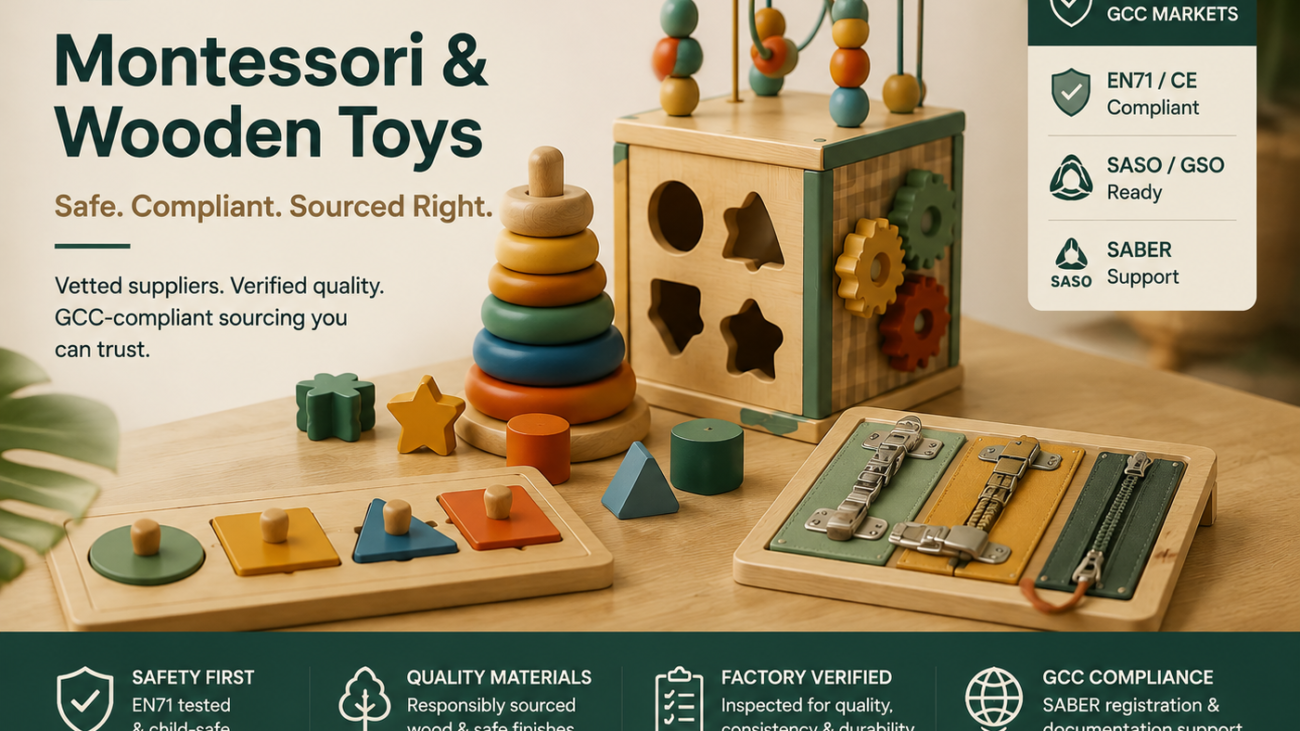
Sourcing Montessori & Wooden Toys from China: What GCC Buyers Get Wrong Without a Sourcing Partner

A closer look at one of the fastest-moving categories on Amazon.sa — and why finding a factory is the easy part.

Montessori and wooden toys are one of the strongest-performing categories in GCC baby and kids e-commerce right now. Screen-free, developmental play has real pull with GCC parents, and sorting toys, activity cubes, busy boards, and learning puzzles consistently rank among the top movers on Amazon.sa and in boutique storefronts across Riyadh, Jeddah, and Dubai.

That demand is exactly why so many buyers try to source this category on their own — and why so many of them get burned. Wood-based toys look simple to vet from a product photo. In practice, this is one of the categories where the gap between “looks fine in the listing” and “actually safe and durable” is widest, and where a sourcing partner earns its keep the most.

Why Wooden Toys Are Harder to Vet Than They Look

A metal or plastic product’s quality issues tend to show up in obvious ways — a crack, a broken hinge. Wood is different. The problems that matter most in this category are often invisible in a product photo and only surface after a shipment has already landed:

  • Finish and coating safety. Non-toxic, child-safe finishes are the entire point of a wooden toy, but “non-toxic” claims from a factory are worth exactly as much as the documentation behind them. Without material safety paperwork checked before a bulk order, a buyer has no way to confirm what’s actually on the wood their customer’s toddler will chew on.
  • Wood sourcing and consistency. Responsibly sourced wood isn’t just a sustainability line — it affects grain quality, splinter risk, and how consistently a factory can reproduce the same product run after run. A first sample can look great and still come from a supplier who can’t hold that standard at volume.
  • Small-parts and choking-hazard geometry. Sorting toys and puzzles are built around small, separable pieces by design. Getting the dimensions and edge tolerances right against EN71 small-parts requirements is a detail that’s easy for an unverified factory to get wrong and hard for a buyer overseas to catch from a spec sheet.
  • Joinery and fastening durability. Busy boards and activity cubes combine multiple moving parts — knobs, latches, sliders. Loose joinery doesn’t always show up in a first sample; it shows up after a few hundred uses, which is exactly when a buyer can least afford to find out.

What We Check Before a Montessori Supplier Enters Our Network

This is where a sourcing partner’s job actually happens — not in the outreach, but in the screening a buyer would otherwise have to do themselves, from another country, without being able to walk the factory floor.

  1. Documentation first. We ask for material safety and finish documentation before requesting samples, not after. A supplier who can’t produce it promptly is a signal, not a formality.
  2. Physical sample inspection. Every sample is checked against EN71 small-parts and safety benchmarks, with particular attention to edge finishing, joint strength, and coating adhesion — the details that don’t show up in a photo.
  3. Production consistency checks. We look at a supplier’s track record across previous runs, not just their best sample, since the gap between a hand-finished sample and a factory’s actual output is where most quality complaints originate.
  4. Compliance mapping to destination. Montessori and wooden toys sold into the GCC still need to clear EN71/CE benchmarks and SASO/GSO and SABER requirements on the Saudi side — and SABER registration sits with the Saudi CR holder, so we coordinate with buyers directly to make sure that paperwork is lined up before goods ship, not after they’re stuck at port.

Where a supplier falls short on any of this, they don’t move into our sourcing pool — no matter how good the sample photos look or how attractive the price point is.

The Real Cost of Sourcing This Category Alone

The buyers who get hurt worst in this category aren’t the ones who skip sourcing altogether — they’re the ones who source directly from a factory they found through a marketplace listing, get a great-looking sample, and place a bulk order on the strength of that one sample. The finish issue, the small-parts tolerance problem, or the joinery weakness that a proper inspection would have caught shows up instead in customer returns, a SABER compliance snag, or a listing suspension — all of it far more expensive than the sourcing work would have been upfront.

That’s the gap Bait Farasha is built to close: we do the factory-floor verification a GCC-based buyer can’t do from overseas, so that by the time a Montessori or wooden toy product reaches your catalog, the documentation, the sample, and the supplier’s track record have already been checked.

Ready to Add Montessori & Wooden Toys to Your Catalog?

Whether you’re a Riyadh boutique looking for a signature wooden toy line or an Amazon.sa seller expanding into developmental play, Bait Farasha gives you a vetted, compliant path into this category — without needing to verify a Chinese factory yourself.

Get in touch with our team to talk through what’s selling in this category right now and how we can bring it into your catalog safely.

He818887819e6491897f321bc150f5504Q

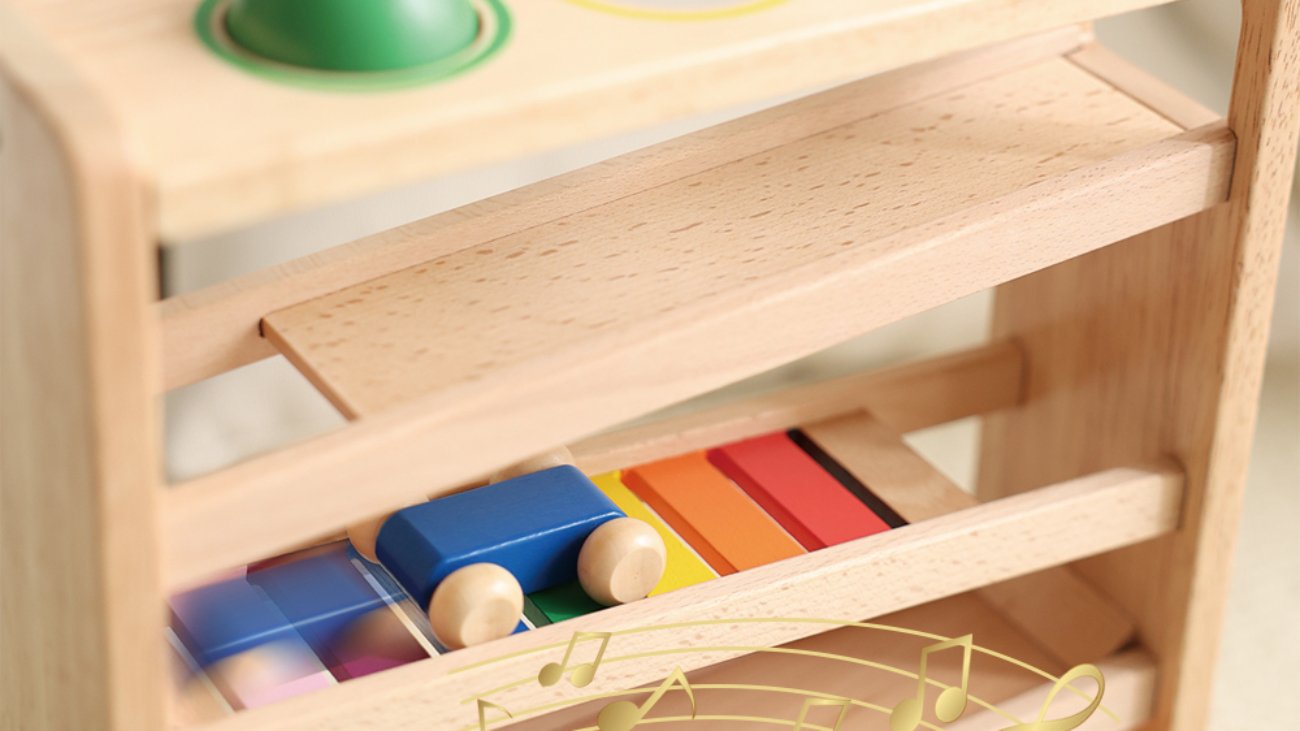
WOOD IS WINNING

  What the China-to-GCC Sourcing Data Means for Your Catalog and Your Margins A parent in Riyadh is scrolling Amazon.sa right now, comparing two nearly identical sorting toys — one plastic, one wood — and choosing the wooden one, even though it costs more. Multiply that choice by thousands of households across the GCC, and you’re looking at one of the clearest category shifts in the baby and kids’ space today. This isn’t a soft trend piece. It’s a shift backed by real buying data, and it has direct implications for what you stock, how you price it, and where your next catalog expansion should go.

In 30 Seconds

The essentials, if you only read one section:
•      The global wooden and Montessori toy market is on a sustained multi-year growth path.
•      A majority of parents now weigh environmental impact before buying a toy, and nearly half see wood as more durable than plastic.
•      Asia-Pacific — where Bait Farasha sources directly — is projected to be among the fastest-growing supply regions for this category.
•      Wood commands a premium buyers are already willing to pay: real margin room, not just a trend to chase.

Built for the China-to-GCC Corridor

This is exactly the shift Bait Farasha exists to serve. We’re a Beijing-based sourcing partner built specifically around one corridor: verified Chinese manufacturers on one end, GCC retailers and Amazon.sa sellers on the other. That regional growth curve isn’t an abstract forecast for us — it’s the supply base we already have relationships in. When Asia-Pacific manufacturing capacity for this category expands, it expands inside the network we’re already sourcing from. Sourcing Quality. Delivering Trust. — a China-to-GCC pipeline built for exactly this category shift.

The Category, By the Numbers

Industry forecasts point to steady growth for wooden and Montessori toys over the coming years, driven by three converging forces: education-focused parenting, sustainability concerns, and a pullback from screen-heavy, disposable plastic toys. [Note for internal review: the specific percentages and growth figures from the original draft should be replaced with named, dated sources — e.g. a specific Grand View Research or Statista report — before this goes external. Happy to pull and verify those once you confirm which report you’re citing.]

Why Parents Are Actually Switching

This isn’t about aesthetics. The reasons parents give are concrete and consistent: durability, safety, screen-free play, and a genuine willingness to pay more for materials they trust. Put together, these numbers describe a buyer who has already decided wood is worth paying more for — before they’ve even opened your listing. Your job is simply to be the one who has it in stock.

What’s Actually Selling

Not every wooden toy performs equally, and chasing the category blindly wastes budget. Four subcategories consistently pull ahead:
  • Multi-function activity cubes — busy-board style toys combining shape sorting, bead mazes, and gears. High perceived value and a strong standalone gift item.
  • Wooden sorting and stacking toys — simple, classic, dependable sellers across nearly every price tier.
  • Busy boards and sensory panels — especially strong for the 1–3 age range, often found by parents searching “screen-free” or “Montessori.”
  • Letter, number, and shape puzzles — steady performers for the 3+ bracket, frequently bought alongside early-learning materials.

What This Means for Your Catalog

  • If your 1–4 age range is still plastic-heavy, this is a reasonable moment to test a wood alternative alongside your bestsellers — not replace them outright.
  • Premium positioning works here. Buyers already primed to pay more for wood respond well to a higher price point paired with genuinely good finish and materials.
  • None of this bypasses compliance — wood toys still need to clear EN71 and SASO/SABER requirements like any other toy. Lock down documentation before committing to volume.

Where This Fits Into Your Sourcing Strategy

This is exactly the kind of demand signal we build into supplier recommendations — matching what’s actually moving in the GCC market to manufacturers who can produce it at the finish and safety standard today’s buyers expect. If you’re weighing an expansion into this category, message us on WhatsApp (+966 54 041 3474) and we’ll walk through current supplier options and realistic lead times.